
Dividend Investing 101: How Dividend Stocks Can Create Consistent Income Over Time
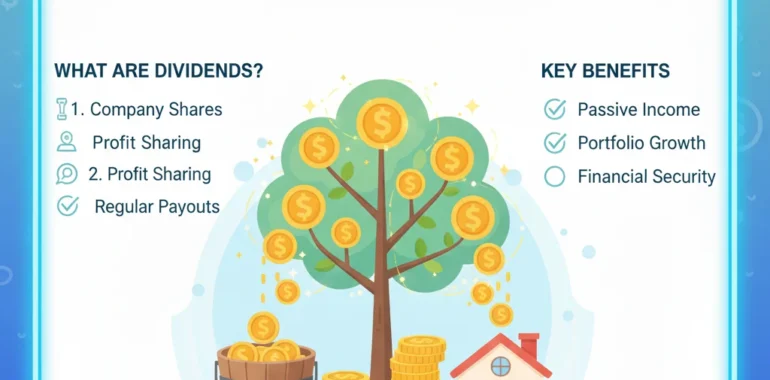
Dividend Investing 101: How Dividend Stocks Can Create Consistent Income Over Time
Dividend Investing 101: How Dividend Stocks Can Create Consistent Income Over Time
For many investors, the idea of receiving regular cash payments simply for owning stocks sounds almost too good to be true. Yet this is exactly what dividend investing offers. Instead of relying only on buying low and selling high, dividend investors build portfolios that pay them income month after month — while still allowing their investments to grow in value over time.
In this guide, we’ll break down how dividend investing works, why it’s so powerful, and how beginners can start using dividends to build long-term wealth and financial stability.
What Are Dividends?
A dividend is a portion of a company’s profits that is paid out to shareholders. When a company earns money, management has two main choices:
- Reinvest the profits back into the business, or
- Share part of those profits with investors in the form of dividends.
Dividends are usually paid:
- quarterly (most common),
- monthly (some companies and funds),
- or annually.
For example, if you own 100 shares of a company that pays $0.50 per share every quarter, you will receive:
100 × $0.50 = $50 per quarter
or $200 per year — simply for owning the stock.
This is why dividends are often called passive income.
Why Dividend Investing Is So Attractive
Dividend investing has several unique advantages that make it especially appealing to long-term investors.
1. Consistent Income
Dividends can provide a steady stream of cash that you can:
- reinvest to grow wealth faster,
- use to pay bills,
- or save for future goals.
For retirees, dividend income can even become a substitute for a paycheck.
2. Lower Market Stress
Stock prices rise and fall every day. Dividend investors don’t need to obsess over short-term fluctuations because their primary goal is income, not constant buying and selling. As long as the company continues paying dividends, their strategy still works.
3. Compounding Power
Reinvesting dividends — using them to buy more shares — creates compound growth. Over years, this snowball effect can dramatically increase your returns. Many brokerage platforms even allow automatic dividend reinvestment (called DRIP programs).
4. Stronger, More Stable Companies
Companies that pay dividends consistently are often:
- profitable,
- mature,
- financially disciplined.
Many have long track records of weathering economic downturns while still rewarding shareholders.
You may find this interesting:
Types of Dividend Stocks
Not all dividend-paying companies are the same. Understanding the main categories helps investors choose wisely.
✔️ Dividend Aristocrats
These are companies that have increased their dividends every year for at least 25 consecutive years. Examples often include consumer staples, utilities, and industrial giants. They are known for reliability and financial strength.
✔️ High-Yield Stocks
These stocks offer above-average dividend returns. However, high yield can sometimes signal risk — a company might be under pressure and using high dividends to attract investors. Always research before chasing high yields.
✔️ Dividend Growth Stocks
These companies may not pay the highest dividend today, but they consistently increase payouts. Over time, these increases can create substantial income.
✔️ Real Estate Investment Trusts (REITs)
REITs hold real estate properties and are required to distribute most of their income as dividends. They are popular with investors seeking higher yields and exposure to real estate.
How to Evaluate Dividend Stocks
Before investing, it’s important to analyze whether a company’s dividends are sustainable.
💡 Dividend Yield
This tells you how much income you earn relative to the stock price.
Dividend Yield = Annual Dividend ÷ Share Price
A very high yield (over 8–10%) can be a red flag — it may signal financial trouble or a dividend that could be cut.
💡 Payout Ratio
This shows how much of the company’s profits are paid out as dividends.
- A payout ratio under 60% is usually considered healthy.
- If it’s close to 100% (or even higher), the dividend may not be sustainable.
💡 Dividend History
Look for companies with stable or growing dividend records. Long-term consistency usually means reliable management and strong earnings.
💡 Business Stability
Dividends depend on profits. Companies in industries with predictable income — such as utilities, consumer goods, and telecom — tend to be more reliable dividend payers than highly volatile startups.
Building a Dividend Portfolio: Step-by-Step
If you’re new to dividend investing, here’s a simple approach to get started.
Step 1: Define Your Goal
Are you investing for:
- retirement income?
- extra monthly cash?
- long-term wealth growth?
Your goal will influence your stock choices.
Step 2: Diversify Across Sectors
Avoid putting all your money into one type of dividend stock. A balanced portfolio might include:
- dividend growth companies,
- a few high-yield stocks,
- REITs,
- and broad dividend ETFs.
This reduces risk if one company cuts its dividend.
Step 3: Reinvest Dividends Automatically
Turn on dividend reinvestment if available. Over decades, this simple habit can multiply your returns significantly.
Step 4: Stay Consistent
Dividend investing rewards patience. Keep adding to your portfolio regularly — even during market downturns — and let compounding work in your favor.
Risks to Be Aware Of
Dividend investing is powerful, but not risk-free.
❌ Dividend Cuts
Companies may reduce or eliminate dividends during financial stress. This usually causes the stock price to drop as well.
❌ Over-Focusing on Yield
Chasing the highest yields can lead to investing in weak companies. Always analyze fundamentals first.
❌ Market Risk
Even strong dividend stocks fluctuate in value. Long-term investors must be comfortable with temporary declines.
❌ Inflation
If dividends don’t grow over time, inflation can reduce their purchasing power. This is why dividend growth stocks are important.
Dividend Investing vs. Trading
Short-term trading focuses on rapid price movements. Dividend investing focuses on:
- steady growth,
- reliable income,
- long-term stability.
Instead of constantly guessing where prices will go next, dividend investors build wealth patiently. For beginners — and for people looking for more predictable returns — dividend strategies often feel less stressful and more rewarding.
Final Thoughts: Building Wealth the Smart Way
Dividend investing is not a get-rich-quick scheme. It works best when combined with:
✔️ long-term thinking
✔️ consistent investing habits
✔️ reinvesting dividends
✔️ choosing quality companies
Over time, dividend stocks can transform your portfolio into a powerful income-producing asset. Whether you want to supplement your salary, prepare for retirement, or simply grow your money steadily, dividend investing offers a practical and proven path.
Start small, stay patient, and let your money work for you — one dividend payment at a time.